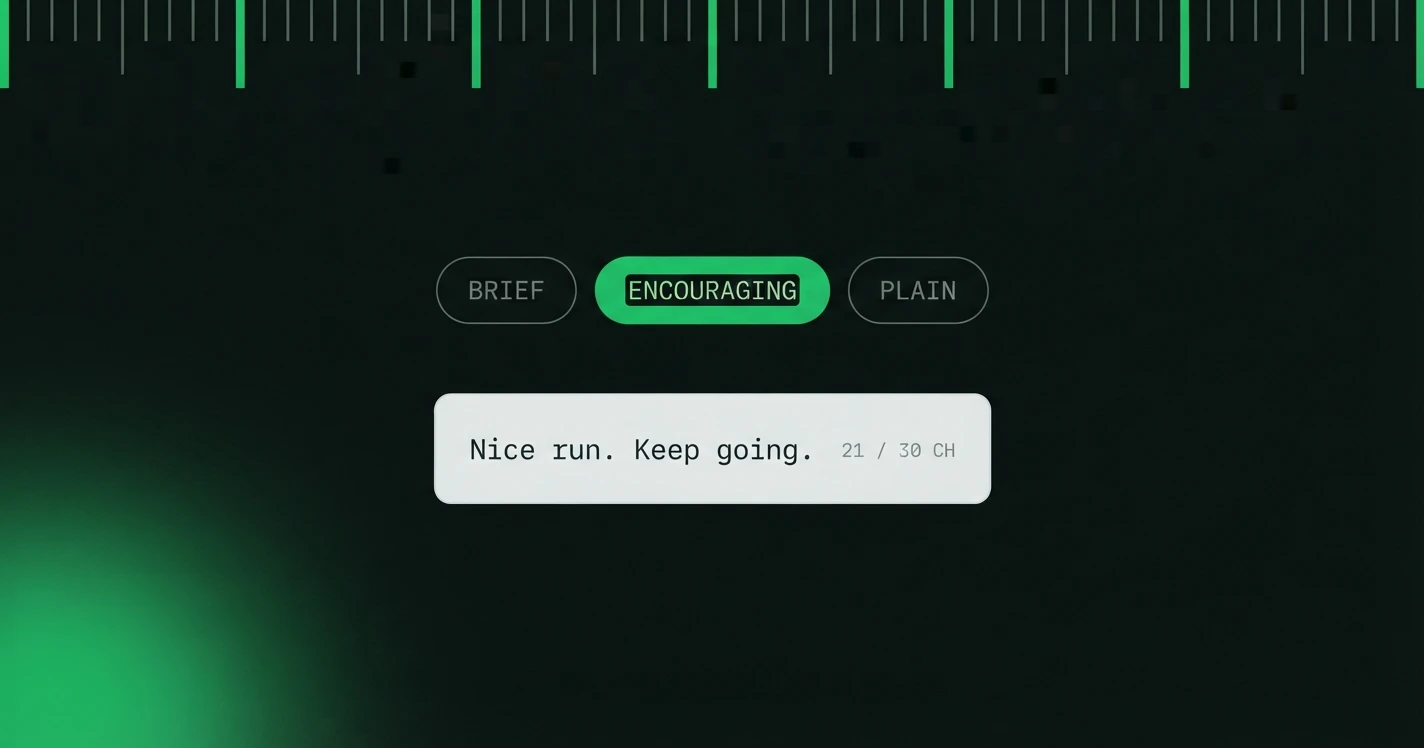
The biggest fear teams have when adopting AI for copywriting is losing the distinctive voice that makes their brand recognisable. It's a valid concern, most generic AI outputs sound like they were written by the same committee that designed every SaaS landing page from 2019 to 2023.
At MicroKopy, we've spent hundreds of hours solving this problem. Here's how we approach it.
The Brand Voice Problem
Generic AI copy is generic because generic prompts produce generic outputs. If you send a model "write a CTA button for a checkout page," you'll get "Proceed to Checkout," "Complete Purchase," or "Buy Now", all technically correct, all utterly forgettable.
Brand voice is a combination of: - Vocabulary: the specific words your brand uses and avoids - Tone: formal vs casual, playful vs serious, warm vs direct - Rhythm: sentence length, use of fragments, punctuation preferences - Personality: does your brand have opinions? Does it use humour?
How MicroKopy Preserves Voice
1. Brand Voice Configuration
Before generating anything, MicroKopy asks you to define your brand voice. Not with dropdowns like "Professional / Casual / Playful". Those are too coarse to be useful. Instead, we ask for:
- 3 words that describe your brand's personality
- 3 words that explicitly don't describe it
- Example copy you love (ideally from your own product)
- Example copy you hate (from competitors or before you had a style guide)
This creates a voice fingerprint that informs every generation.
2. Context-Aware Prompting
Every microcopy string is generated with full context: the screen it appears on, the user's emotional state at that moment, the action it's prompting, and the brand voice configuration. A CTA on an error screen needs different energy than a CTA in a success state.
3. Consistency Enforcement
The hardest part of microcopy at scale isn't writing one good string. It's ensuring string #247 sounds like the same brand as string #1. We do this by including recently accepted copy from the same project in the generation context, so the model learns from your own approved outputs as you build your library.
What AI Is Bad At (and We're Honest About It)
AI is excellent at generating options quickly and maintaining tonal consistency within a session. It's less reliable for:
- In-jokes and cultural references that require deep community knowledge
- Hyper-specific industry jargon that isn't well-represented in training data
- Intentionally rule-breaking copy like deliberately bad grammar used for personality
For these, we recommend using generated copy as a starting draft and applying a human editing pass. The goal is never to remove humans from the loop. It's to eliminate the blank page problem and the 47-tab research session.
The Result
Teams using MicroKopy consistently report that after the first 20-30 accepted strings, new generations start feeling noticeably more on-brand. The model has enough examples from your library to pattern-match your voice, not just a style description.
The brand voice problem is real, but it's solvable. The key is treating AI as a collaborator that learns from your approvals, not a vending machine you put prompts into.
We build the copy layer for product screens: tone presets, character ceilings and a review trail that travels with every string.